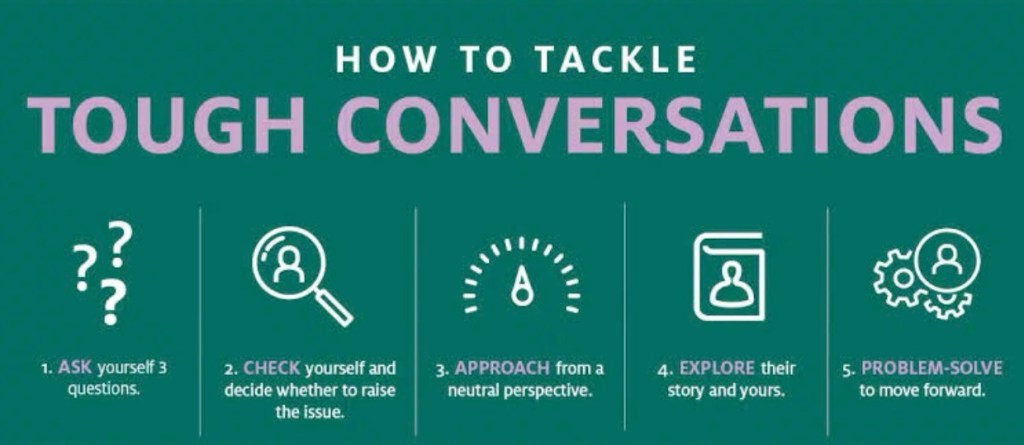
Navigating the intricate web of difficult conversations requires finesse and emotional intelligence. Life, in all its complexities, often throws us into situations where addressing issues head-on becomes unavoidable. Whether it’s a challenging discussion at work or a sensitive matter in your personal life, the ability to handle these conversations effectively is a skill worth mastering.
Understanding the Emotional Landscape:
Emotions play a pivotal role in difficult conversations. Before embarking on such a dialogue, take a moment to explore your own emotional landscape. Identify the feelings that surface and the triggers behind them. This self-awareness not only prepares you for the conversation but also prevents emotions from clouding your judgment.
The Ticking Clock of Timing:
Timing can be the difference between a fruitful conversation and a disastrous one. Choose a moment when both parties can engage without the pressure of looming deadlines or external stressors. Creating a conducive environment is essential—select a quiet and private setting that fosters open communication. The right timing and setting lay the foundation for a conversation where all parties can express themselves freely.
Preparation: The Backbone of Confidence:
Effective communication in difficult conversations often hinges on preparation. Anticipate potential challenges, define the issue at hand, assess its impact, and brainstorm possible solutions. Being well-prepared not only boosts your confidence but also ensures that the conversation stays focused and productive
Types of Difficult Conversations
- Work-Related Challenges:
In a professional setting, addressing work-related challenges can be particularly delicate. Suppose a team member consistently fails to meet deadlines, affecting the entire project. Initiating a conversation about performance concerns requires a balance of firmness and empathy. Begin by acknowledging their efforts, then gently address the specific instances of missed deadlines, and collaboratively explore solutions. - Personal Relationships:
Difficult conversations in personal relationships often involve sensitive topics. Consider a scenario where a friend consistently cancels plans without explanation. To address this, approach the conversation with a genuine desire to understand their perspective. Use “I” statements to express your feelings, such as “I feel disappointed when plans are canceled last minute.” This creates a non-confrontational space for discussing the issue. - Constructive Feedback in the Workplace:
Providing constructive feedback to a colleague requires tact and precision. Suppose a team member consistently dominates discussions, hindering collaborative decision-making. Instead of directly pointing fingers, offer feedback on specific instances. For example, “During our last meeting, I noticed that some team members didn’t have the opportunity to share their thoughts due to time constraints. How can we ensure everyone’s voice is heard in future discussions?” - Addressing Personal Boundaries:
In personal relationships, setting and maintaining boundaries can be challenging. Imagine a situation where a family member consistently crosses boundaries by prying into your personal life. Initiate the conversation by expressing gratitude for their concern while firmly stating your need for privacy. Use examples to illustrate specific instances, helping them understand the impact of their actions. - Managing Conflicts at Work:
Workplace conflicts are inevitable, and addressing them head-on is crucial for a healthy work environment. If conflicts arise between team members, facilitate a conversation where both parties can express their perspectives. Find common ground and encourage a collaborative approach to resolving differences. A mediator can also be brought in if the conflict persists. - Discussing Sensitive Health Issues:
Conversations about health issues require utmost sensitivity. If a friend or family member is facing a health challenge, approach the conversation with empathy and compassion. Use “I” statements to express your concern and offer support, such as “I’ve noticed you’ve been going through a tough time, and I’m here to support you in any way you need.”
Individual Tips and Ideas to Navigating Difficult Conversations
- Understand Your Emotions:
Before initiating a difficult conversation, take a moment to understand your emotions. Identify your feelings and the root cause behind them. This self-awareness will prevent you from letting emotions dictate the conversation. - Choose the Right Time and Place:
Timing is crucial. Pick a time and place where both parties can engage without distractions. A quiet and private setting fosters open communication, making it easier to address the issues at hand. - Be Prepared:
Anticipate potential challenges and prepare your thoughts in advance. Clearly define the issue, its impact, and propose solutions. This will give you confidence during the conversation. - Active Listening:
Listening is as important as speaking. Practice active listening by giving your full attention, paraphrasing what you’ve heard, and asking clarifying questions. This ensures that both parties feel heard and understood. - Use “I” Statements:
Express your thoughts using “I” statements to avoid sounding accusatory. For example, say “I feel concerned when…” instead of “You always do this.” This shifts the focus to your feelings and promotes a collaborative approach. - Stay Calm and Composed:
Difficult conversations can become emotionally charged. Maintain your composure, even if the other person becomes defensive. A calm demeanor encourages a more constructive dialogue. - Find Common Ground:
Identify shared goals or interests to create a sense of unity. This helps in fostering collaboration and finding mutually beneficial solutions. - Offer Constructive Feedback:
Provide specific examples and focus on behavior rather than making judgments about the person. Constructive feedback is more likely to be well-received and lead to positive change. - Know When to Seek Mediation:
In some cases, involving a neutral third party can facilitate resolution. Mediators are trained to guide conversations and ensure both parties have a fair chance to express themselves. - Learn from Each Conversation:
After each difficult conversation, reflect on what went well and what could be improved. Use these insights to refine your communication skills for future interactions.
Conclusion
Mastering the art of navigating difficult conversations is an ongoing journey toward personal and interpersonal growth. Each conversation presents an opportunity to refine your communication skills and deepen your understanding of others. Embrace the challenges, knowing that by approaching these discussions with empathy, active listening, and a solution-oriented mindset, you not only overcome obstacles but also foster stronger connections.
Continuous Learning:
Difficult conversations are not isolated events; they are part of life’s continuous learning process. Reflect on each conversation, identifying areas of improvement and acknowledging what went well. Learning from these experiences allows you to refine your approach, making you better equipped for future interactions. View each difficult conversation as a stepping stone toward becoming a more effective communicator and a more compassionate human being.
Building Bridges, Not Walls:
In conclusion, the ability to navigate difficult conversations is a testament to your emotional intelligence and resilience. Instead of erecting walls of avoidance, learn to build bridges of communication. These bridges connect you to others in meaningful ways, fostering understanding, collaboration, and ultimately, growth. Embrace the challenges, celebrate the victories, and remember that every difficult conversation is an opportunity for positive transformation.
 The Veteran Counsellor Blog