Introduction
Humans are naturally inclined to focus on the negative aspects of life. This tendency, often referred to as the “negativity bias,” is an evolutionary trait that has helped our ancestors survive. However, in today’s world, this bias can have a significant impact on our mental health and overall well-being. Understanding why our brains lean towards negativity and how we can combat this tendency is crucial for improving mental health.
The Evolutionary Roots of Negativity Bias
- Survival Mechanism
- Evolutionary Perspective: Our ancestors needed to be acutely aware of potential dangers to survive. Those who were more vigilant and responsive to threats were more likely to survive and pass on their genes. This heightened sensitivity to negative stimuli ensured that early humans could avoid predators, natural disasters, and other life-threatening situations .
- Cognitive Processing: Negative information is processed more thoroughly by the brain than positive information. This means that we remember and react to negative events more intensely and for longer periods than positive ones .
- Brain Structures Involved
- Amygdala: The amygdala, a key part of the brain involved in emotional processing, is particularly attuned to negative experiences. Research has shown that the amygdala reacts more strongly and for a longer duration to negative stimuli compared to positive ones .
- Hippocampus: The hippocampus works closely with the amygdala to store memories, particularly those associated with strong emotions. This collaboration ensures that negative experiences are vividly remembered, reinforcing the negativity bias .
The Impact of Negativity on Mental Health
- Psychological Effects
- Stress and Anxiety: Persistent negative thoughts can lead to chronic stress and anxiety. The brain’s constant focus on potential threats keeps the body in a heightened state of arousal, which can be exhausting and detrimental over time .
- Depression: A negative outlook can contribute to the development of depression. When the brain repeatedly dwells on negative experiences and thoughts, it creates a cycle of negative thinking that can be hard to break .
- Behavioral Consequences
- Avoidance and Withdrawal: People who consistently focus on the negative may begin to avoid situations that they perceive as potentially harmful, even if those situations could be beneficial or enjoyable. This avoidance can lead to social isolation and reduced opportunities for positive experiences .
- Reduced Motivation: A negative mindset can diminish motivation and the drive to pursue goals. When individuals are preoccupied with potential failures or setbacks, they are less likely to take the necessary steps to achieve their aspirations .
Strategies to Reframe Negative Thoughts
- Cognitive Behavioral Therapy (CBT)
- Identification and Challenge: CBT involves identifying negative thought patterns and challenging their validity. By examining the evidence for and against these thoughts, individuals can begin to see them in a more balanced light .
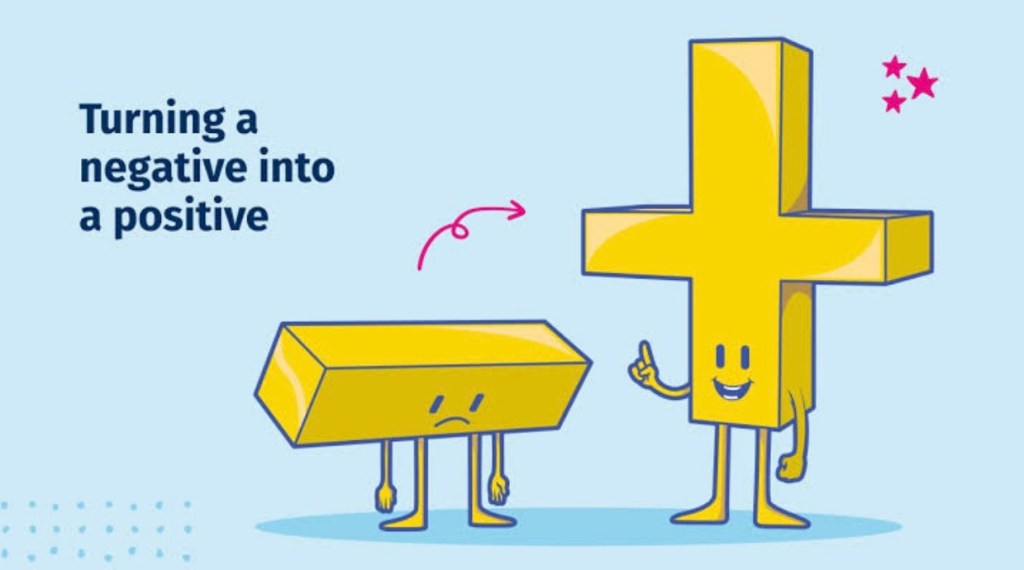
- Reframing: This technique helps individuals reframe negative thoughts into more positive or neutral ones. For example, instead of thinking, “I always fail,” one might reframe it to, “I have faced challenges, but I have also had successes” .
- Mindfulness and Meditation
- Present Moment Awareness: Mindfulness practices encourage individuals to stay present and observe their thoughts without judgment. This can help reduce the impact of negative thoughts by preventing them from spiraling out of control .
- Stress Reduction: Meditation has been shown to reduce stress and improve overall mental well-being. Regular meditation can help retrain the brain to focus less on negative thoughts and more on the present moment .
- Positive Psychology
- Gratitude Practices: Keeping a gratitude journal or regularly reflecting on positive aspects of life can help shift focus from negative to positive experiences. Research has shown that gratitude practices can improve mood and overall life satisfaction .
- Strengths Focus: Identifying and utilizing personal strengths can enhance self-esteem and reduce the impact of negative thoughts. By focusing on what they are good at, individuals can counterbalance negative self-perceptions .
- Behavioral Activation
- Engagement in Positive Activities: Encouraging individuals to engage in activities that bring them joy and satisfaction can help counteract negative thoughts. This can include hobbies, social interactions, and physical exercise .
- Goal Setting: Setting and achieving small, manageable goals can build a sense of accomplishment and combat feelings of helplessness and negativity .
Conclusion
While the brain’s negativity bias is rooted in evolutionary survival mechanisms, it can have detrimental effects on mental health in the modern world. By understanding the origins and impact of this bias, we can employ various strategies to reframe negative thoughts and improve overall well-being. Techniques such as cognitive behavioral therapy, mindfulness, positive psychology, and behavioral activation offer practical approaches to fostering a more positive and balanced mindset. With consistent effort and practice, it is possible to overcome the brain’s natural inclination toward negativity and enhance mental health.
References
- Hanson, R. (2013). Hardwiring Happiness: The New Brain Science of Contentment, Calm, and Confidence. Harmony.
- Baumeister, R. F., et al. (2001). “Bad is stronger than good.” Review of General Psychology, 5(4), 323-370.
- Rozin, P., & Royzman, E. B. (2001). “Negativity bias, negativity dominance, and contagion.” Personality and Social Psychology Review, 5(4), 296-320.
- Phelps, E. A. (2004). “The human amygdala and awareness: Interactions between emotion and cognition.” Handbook of Affective Sciences, 3(3), 329-342.
- McGaugh, J. L. (2004). “The amygdala modulates the consolidation of memories of emotionally arousing experiences.” Annual Review of Neuroscience, 27, 1-28.
- Cohen, S., et al. (2007). “Psychological stress and disease.” JAMA, 298(14), 1685-1687.
- Gotlib, I. H., & Joormann, J. (2010). “Cognitive aspects of depression.” Handbook of Depression, 2, 259-276.
- Kashdan, T. B., & Rottenberg, J. (2010). “Psychological flexibility as a fundamental aspect of health.” Clinical Psychology Review, 30(7), 865-878.
- Carr, A. (2011). Positive Psychology: The Science of Happiness and Human Strengths. Routledge.
- Beck, J. S. (2011). Cognitive Behavior Therapy: Basics and Beyond. Guilford Press.
- Fenn, K., & Byrne, M. (2013). “The key principles of cognitive behavioural therapy.” InnovAiT, 6(9), 579-585.
- Kabat-Zinn, J. (2003). “Mindfulness-based interventions in context: Past, present, and future.” Clinical Psychology: Science and Practice, 10(2), 144-156.
- Goyal, M., et al. (2014). “Meditation programs for psychological stress and well-being: A systematic review and meta-analysis.” JAMA Internal Medicine, 174(3), 357-368.
- Emmons, R. A., & McCullough, M. E. (2003). “Counting blessings versus burdens: An experimental investigation of gratitude and subjective well-being in daily life.” Journal of Personality and Social Psychology, 84(2), 377.
- Seligman, M. E. P., et al. (2005). “Positive psychology progress: Empirical validation of interventions.” American Psychologist, 60(5), 410.
- Mazzucchelli, T. G., Kane, R. T., & Rees, C. S. (2010). “Behavioral activation interventions for well-being: A meta-analysis.” Journal of Positive Psychology, 5(2), 105-121.
- Locke, E. A., & Latham, G. P. (2002). “Building a practically useful theory of goal setting and task motivation: A 35-year odyssey.” American Psychologist, 57(9), 705-717
 The Veteran Counsellor Blog