Introduction:
Grief is an intricate tapestry of emotions woven in the wake of loss, transcending boundaries of culture, age, and circumstance. It is a profound, often overwhelming response to the absence of someone or something significant in our lives. In this blog, we delve into the multifaceted nature of grief, exploring its definition, its impact on individuals, and the intricate stages that accompany its journey.
- Defining Grief:
Grief, in its essence, is the profound emotional response to the experience of loss. It encompasses a wide spectrum of emotions, ranging from deep sadness and anger to confusion and numbness. Each individual’s experience of grief is deeply personal and influenced by the nature of the relationship they had with the person or thing that is no longer present. This loss can arise from various sources, including death, the dissolution of a relationship, the loss of a job, or any significant change that disrupts the familiar fabric of one’s life. - The Effects of Grief:
The impact of grief extends far beyond the realm of emotions, affecting individuals on both psychological and physiological levels. Emotionally, grief can lead to feelings of profound emptiness, loneliness, and despair. It can disrupt normal patterns of sleep, appetite, and concentration, leaving individuals feeling mentally and physically drained. Moreover, grief can strain interpersonal relationships, as those who are grieving may struggle to articulate their pain or find solace in the support of others. - The Stages of Grief:
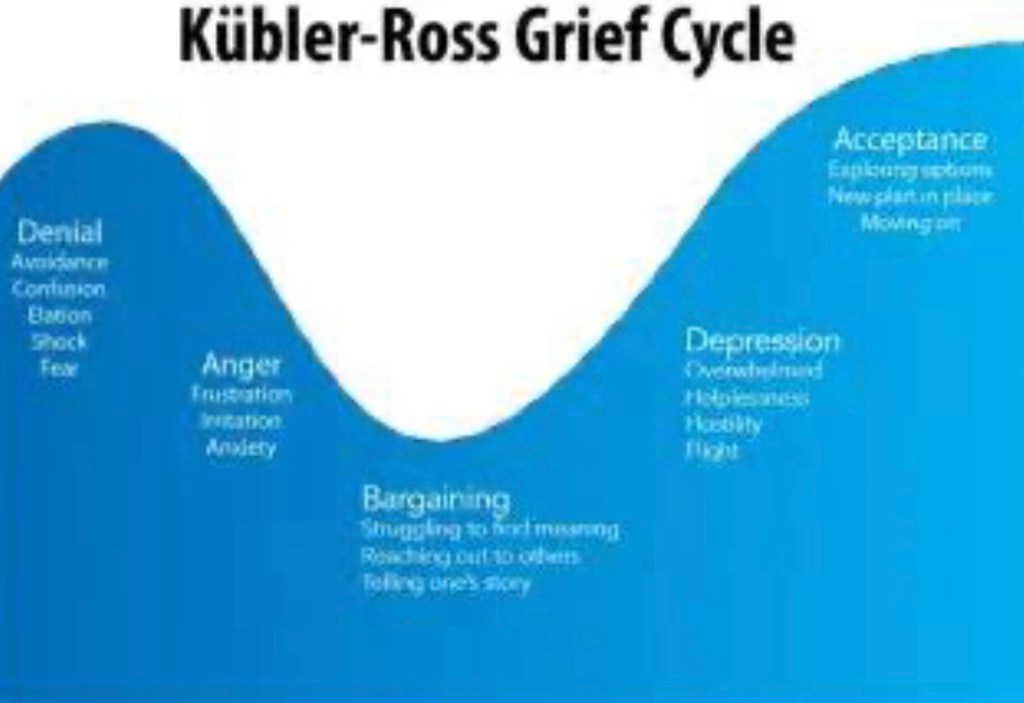
Elisabeth Kübler-Ross famously delineated the five stages of grief in her seminal work “On Death and Dying.” These stages are denial, anger, bargaining, depression, and acceptance. However, contemporary research suggests that the grieving process is more nuanced and may encompass additional stages. These stages include shock and disbelief, yearning and searching, disorganization and despair, and reorganization and recovery. While these stages offer a framework for understanding the grieving process, it’s essential to recognize that grief is not a linear journey, and individuals may move through the stages in a nonlinear fashion or revisit certain emotions multiple times. - Denial:
Denial is often the initial stage of grief, during which individuals may struggle to accept the reality of their loss. They may exhibit disbelief or numbness, unable to comprehend the magnitude of the change that has occurred. Denial serves as a protective mechanism, shielding individuals from the full impact of their loss until they are emotionally ready to confront it. - Anger:
As the reality of the loss begins to sink in, individuals may experience intense feelings of anger and resentment. They may direct their anger towards themselves, others, or even the deceased, grappling with a sense of injustice or unfairness. Anger can serve as a natural response to feelings of powerlessness and helplessness in the face of loss. - Bargaining:
In the bargaining stage, individuals may attempt to negotiate with a higher power or make deals in a desperate attempt to reverse or mitigate their loss. They may find themselves engaging in “if only” or “what if” scenarios, seeking ways to regain control or find meaning in their grief. Bargaining represents an attempt to reconcile the irreversibility of loss with a desire for a different outcome. - Depression:
Depression is a common and natural response to grief, characterized by feelings of profound sadness, hopelessness, and despair. Individuals may withdraw from social interactions, experience disruptions in sleep and appetite, and struggle to find pleasure or meaning in daily activities. Depression allows individuals to mourn the loss fully and come to terms with the reality of their new circumstances. - Acceptance:
Acceptance is the final stage of grief, marked by a gradual coming to terms with the reality of the loss. It does not signify the absence of sadness or pain but rather a recognition of the inevitability of change and a willingness to embrace life in its new form. Acceptance allows individuals to integrate their loss into their sense of self and move forward with a renewed sense of purpose and meaning.
Grief is a universal human experience that transcends language, culture, and geography. It is a testament to the depth of our connections and the profound impact of loss on the human psyche. By understanding the multifaceted nature of grief, acknowledging its effects, and embracing the complexity of the grieving process, we can navigate the tumultuous waters of loss with compassion, resilience, and ultimately, healing.
 The Veteran Counsellor Blog