Defing Grief
Grief, a profound and intricate emotion, is an inevitable facet of the human experience. It serves as the emotional response to the profound sense of loss, encompassing various forms such as the death of a loved one, the end of a relationship, or the loss of a significant aspect of one’s identity. This complex emotional terrain navigates through the deep recesses of the human psyche, influencing thoughts, behaviors, and overall well-being.
At its core, grief is a poignant acknowledgment of the void left by what once was—an emotional reaction to the absence of someone or something cherished. It extends beyond the surface of sadness, permeating through layers of human consciousness, triggering a range of emotions that can be challenging to articulate. As individuals grapple with grief, they often find themselves entangled in a web of emotions that include sorrow, anger, confusion, and a profound sense of emptiness.
The significance of grief lies in its universality and its capacity to bind individuals together through shared experiences. Regardless of cultural background, socioeconomic status, or age, grief is a common thread that weaves through the fabric of the human condition. It is a testament to the depth of human connections and the impact that relationships and experiences have on shaping our identities.
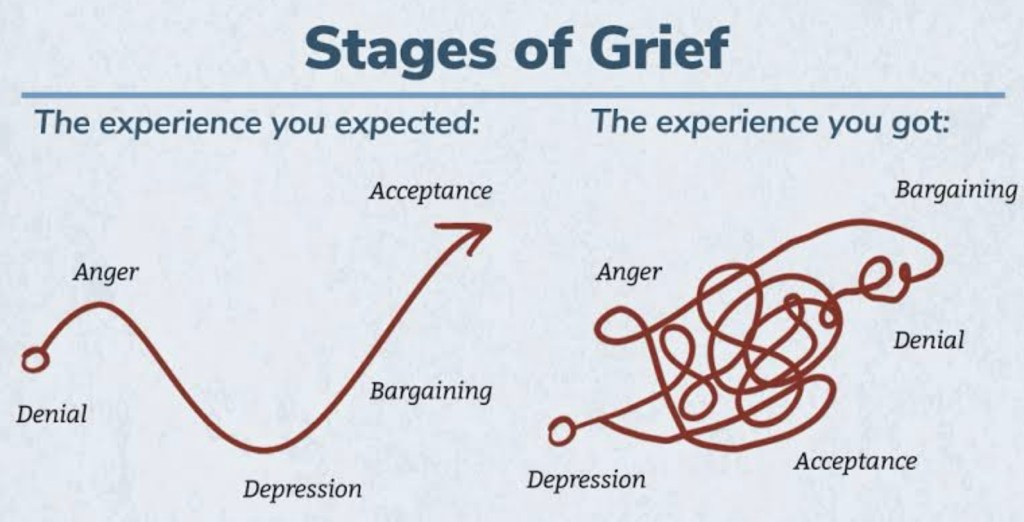
Moreover, grief is not a linear journey; it defies a standardized trajectory. The intensity and duration of grief vary from person to person, making it a highly individualized experience. This uniqueness adds to the complexity of grief, challenging conventional notions of how it should be expressed or resolved. In recognizing grief as a complex emotional response, we acknowledge its multifaceted nature, honoring the diversity of human emotions and reactions.
The emotional turbulence that accompanies grief underscores its profound impact on mental and physical well-being. Studies have shown that prolonged, unaddressed grief can lead to a range of health issues, emphasizing the need for individuals to navigate this emotional terrain with support and understanding. Grief, though challenging, is a crucial element in the process of healing and growth. It prompts self-reflection, fostering resilience and the capacity to adapt to life’s inevitable changes.
The Kubler-Ross Model
The Kübler-Ross model, proposed by psychiatrist Elisabeth Kübler-Ross in her seminal work “On Death and Dying” in 1969, provides a comprehensive framework for understanding the emotional responses individuals undergo when faced with terminal illness or impending death. Although initially developed in the context of patients facing their mortality, the model has since been widely applied to various forms of loss, offering valuable insights into the universal stages of grief.
The first stage in the Kübler-Ross model is denial, where individuals grapple with the initial shock of the loss. This phase is characterized by a sense of disbelief and a tendency to reject the reality of the situation. It serves as a psychological defense mechanism, providing a buffer against the overwhelming emotions associated with the loss.
Following denial, individuals often enter the stage of anger. As the reality of the loss sets in, a surge of frustration and resentment may manifest. This anger is not necessarily directed at a specific target but is a visceral response to the perceived injustice of the loss. It is an emotional release that signifies the beginning of the grieving process.
The third stage, bargaining, involves an attempt to negotiate or make deals in an effort to reverse or mitigate the loss. Individuals may find themselves grappling with “what if” scenarios, seeking a compromise with fate or a higher power. This stage reflects a yearning for control and a desperate desire to alter the course of events.
Depression marks the fourth stage of the Kübler-Ross model. As the weight of the loss becomes increasingly apparent, individuals may experience a profound sense of sadness and despair. This phase is a crucial aspect of the grieving process, allowing individuals to confront the depth of their emotions and come to terms with the reality of the situation.
The final stage, acceptance, represents a gradual coming to terms with the loss. It does not imply complete resolution or the absence of sorrow but rather a willingness to embrace a new reality. Acceptance involves integrating the loss into one’s life narrative and finding a way to move forward with a sense of resilience and adaptability.
It’s important to note that the Kübler-Ross model is not a linear progression, and individuals may move back and forth between stages or skip certain stages altogether. The model serves as a guide rather than a strict roadmap for grief, recognizing the uniqueness of each individual’s experience.
In essence, the Kübler-Ross model provides a valuable framework for understanding the complex and multifaceted nature of grief. By acknowledging these stages, individuals and those who support them can gain insights into the emotional landscape of loss, fostering empathy and facilitating a more compassionate approach to the grieving process.
Individuals varying experiences throughout the stages of the Kubler-Ross Model
The Kübler-Ross model, while insightful in delineating the stages of grief, unfolds as a dynamic and varied journey for individuals, profoundly influenced by cultural nuances, personal beliefs, and the specific nature of the loss endured. The universality of grief remains, but its expression and manifestation are intricately shaped by the rich tapestry of individual backgrounds and experiences.
Cultural influences play a pivotal role in shaping the lens through which grief is perceived and expressed. Various cultures have distinct rituals, mourning practices, and beliefs that influence how individuals navigate the grieving process. In some cultures, expressing intense emotions openly might be encouraged, while in others, there may be a cultural norm of stoicism. Understanding these cultural nuances is crucial in appreciating the diverse ways grief is experienced and expressed.
Personal beliefs, encompassing religious, spiritual, or philosophical perspectives, add another layer of complexity to the grieving process. Someone with a strong religious framework may find solace in rituals and faith-based practices, viewing the loss within a larger cosmic narrative. On the contrary, individuals without religious affiliations might seek meaning and comfort in alternative ways, such as introspection or connecting with nature.
Moreover, the nature of the loss itself profoundly influences how individuals traverse the stages of grief. The death of a loved one due to a long-term illness may lead to a more anticipated and gradual grieving process, allowing for some emotional preparation. On the other hand, sudden and unexpected loss can propel individuals into the stages of grief with an intensity that may be challenging to manage initially.
Cultural, religious, and personal factors intertwine and create a unique tapestry of responses to grief. For example, in some cultures, communal support and extended family networks play a central role in the grieving process. Conversely, individualistic societies might place a higher emphasis on personal coping mechanisms and seeking professional support.
Furthermore, the gendered aspect of grief response adds another layer of complexity. Societal expectations and norms often influence how men and women express their grief. Men, for instance, might be socialized to be stoic and reserved, potentially delaying or altering their engagement with the stages of grief.
Healthy ways to Navigate Grief
Navigating grief is a delicate and deeply personal journey, and adopting healthy coping mechanisms is paramount for emotional well-being. Central to this process is the recognition that grief is not a linear path; it’s a nuanced experience that requires time, self-compassion, and intentional efforts to heal.
One crucial avenue for navigating grief is seeking support from friends and family. Opening up to loved ones creates a network of emotional connections, fostering an environment where individuals feel understood and cared for. The simple act of sharing one’s thoughts and emotions can alleviate the burden of grief. Friends and family, with their empathy and support, serve as pillars of strength during this challenging time.
Engaging in therapy provides another valuable channel for navigating grief. Professional therapists offer a safe space for individuals to explore their emotions, providing guidance and tools to cope with the complexities of grief. Therapy enables individuals to express their feelings without judgment, fostering self-awareness and facilitating the process of acceptance.
Participating in support groups offers a sense of communal understanding. Connecting with others who have experienced similar losses creates a shared space for expression and validation. In these groups, individuals can exchange coping strategies, gain insights, and find solace in knowing they are not alone in their journey. The sense of community that support groups provide can be a powerful antidote to the isolation often felt in grief.
Crucially, allowing oneself to grieve without the pressure of time constraints is pivotal. Grief is not a linear process, and rushing through the stages can impede true healing. Each individual’s journey is unique, and acknowledging the ebb and flow of emotions is an integral part of the healing process. Permitting oneself to feel the depth of sorrow, anger, or sadness without judgment is an act of self-compassion that lays the groundwork for eventual acceptance.
Additionally, integrating self-care practices into daily life is vital during the grieving process. Engaging in activities that bring comfort and joy, whether it’s spending time in nature, practicing mindfulness, or pursuing creative outlets, helps individuals reconnect with a sense of normalcy and balance. These self-care practices act as anchors, providing moments of respite amidst the turbulence of grief.
Healthy navigation of grief involves a multifaceted approach that embraces the support of others, professional guidance, and self-compassion. Seeking support from friends and family, engaging in therapy, and participating in support groups create a robust network that acknowledges the individuality of the grieving process. Allowing oneself to grieve without rushing and integrating self-care practices contribute to a holistic approach, fostering resilience and facilitating the gradual journey towards healing.
Conclusion
In the tapestry of human experience, acknowledging and understanding grief emerges as a pivotal thread, weaving through the fabric of personal growth and emotional well-being. The profound journey through grief is not a mere passage of time but an intricate dance with one’s innermost self. By recognizing grief as a transformative force, individuals unlock the potential for profound personal evolution.
To truly grasp the essence of this transformative journey, one must embrace the idea that grief is not an adversary to conquer but a companion to understand. It is in acknowledging the depth of sorrow, the nuances of anger, and the echoes of loss that individuals embark on a path toward healing. This acknowledgment becomes a compass, guiding them through the labyrinth of emotions with a newfound sense of self-awareness.
Crucially, the concept of resilience emerges as a beacon amid the storm of grief. Resilience is not the absence of pain but the profound ability to navigate through it. It is the strength to face the void left by loss and gradually rebuild a sense of self. Resilience thrives in the recognition that grief, while a formidable force, is not the conclusion of one’s story but a transformative chapter.
As individuals traverse the stages of grief, they discover an innate capacity to adapt and find solace in the midst of upheaval. This adaptive resilience does not erase the pain; rather, it reframes the narrative, allowing individuals to carry the memory of their loss while embracing the potential for growth. Resilience unfolds as a dynamic process, a testament to the human spirit’s ability to regenerate and renew.
Finding a new sense of normalcy after experiencing grief is akin to witnessing the gradual emergence of dawn after a long night. It is a delicate, incremental process that involves integrating the wisdom gained from grief into the tapestry of everyday life. The journey toward a new normal is not a linear trajectory but a meandering path marked by moments of reflection, acceptance, and eventual equilibrium.
In this journey, individuals unearth a resilience that extends beyond mere survival—it is a resilience that thrives on the fragments of brokenness, crafting a mosaic of strength and wisdom. The scars left by grief become not symbols of weakness but testaments to the profound capacity of the human heart to endure, transform, and ultimately find meaning in the face of profound loss.
In conclusion, the acknowledgement and understanding of grief stand as pillars of personal growth and emotional well-being. Through the intricate dance with grief, individuals cultivate resilience, not as armor against pain but as a dynamic force that propels them toward a new sense of normalcy. The transformative journey through grief becomes a testament to the indomitable spirit of the human heart—a journey that, despite its challenges, unveils the resilience, strength, and wisdom inherent in the human experience.
 The Veteran Counsellor Blog